Cobblestone Pavers and Natural Stone Cobbles
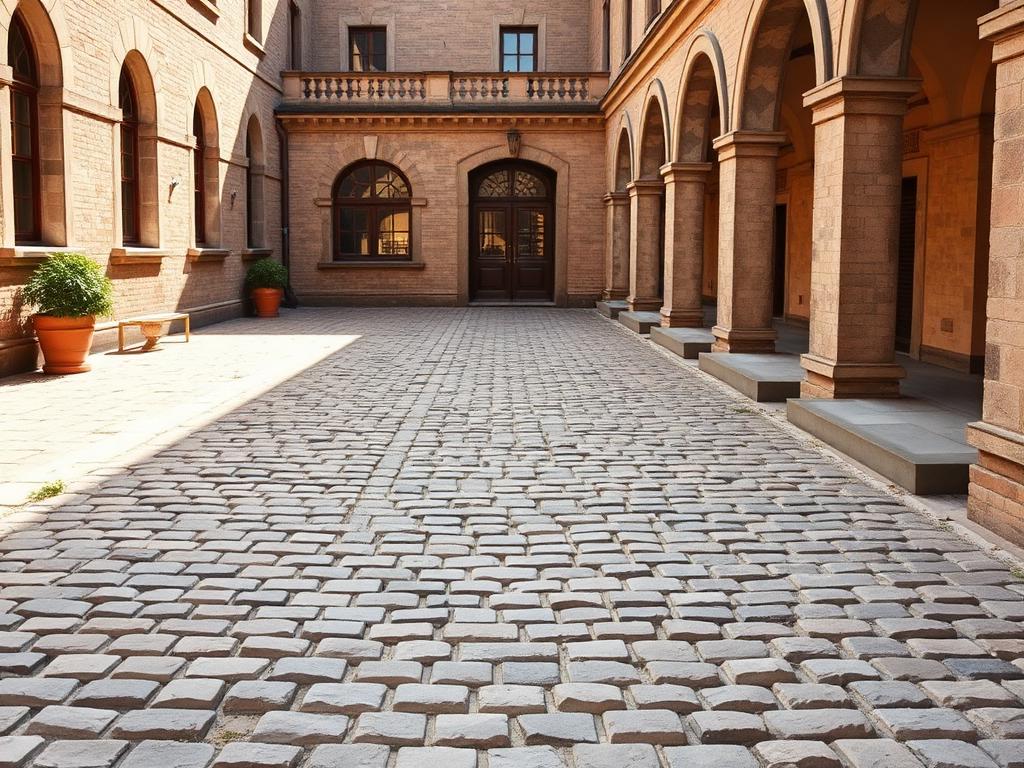
Cobbles sell because they age well and nothing else looks like real stone underfoot. We supply cut cubes, tumbled cobbles and mesh-backed cobble mats in granite, basalt and sandstone, sized so a paving contractor can lay them without re-sorting the pallet.
- Granite, basalt, sandstone and limestone
- Cut cubes, tumbled cobbles and cobble mats
- Consistent thickness for predictable laying
- Crated on pallets for safe handling
Available sizes
- 90×90×90 mm
- 100×100×50 mm
- 100×100×100 mm
- 200×100×50 mm
- Random cobbles
Applications
- Driveways and courtyards
- Pathways and garden edging
- Heritage and restoration paving
- Tree pits and street furniture surrounds
- Feature bands within concrete paving
Typical buyers
- Paving contractors
- Stone yards
- Builders merchants
- Landscape architects
Cubes, tumbled cobbles or mats
Cut cubes give a crisp modern grid. Tumbled cobbles give a softened, aged look. Mesh-backed mats cut laying time dramatically on large areas, which usually decides the choice on commercial jobs.
Thickness and traffic
50 mm is adequate for footpaths and patios. Specify 80–100 mm where vehicles run. Thickness tolerance matters more than face size — inconsistent depths slow a laying crew down.
Coverage and laying allowance
For 100×100×50 mm cobbles laid with a 5–8 mm joint, budget roughly 90–95 pieces per square metre and add 5% wastage for cuts around edges and curves. Cobble mats cover faster — a typical 300×300 mm mesh panel replaces around 9 loose cobbles laid by hand, which is the labour saving that usually justifies their higher unit cost.
Alternative to full cobble paving
Where budget or freight weight rules out full cobble coverage, a cobble mat border or feature band combined with poured concrete or gravel infill gives the same visual reference at a fraction of the tonnage and laying time.
Freight weight per pallet
Natural stone cobbles are dense; a single pallet typically carries 1–1.2 tonnes depending on stone type and size, so a 20ft container usually takes 20–22 pallets before hitting payload limits, well before it runs out of floor space.
Sample and pre-shipment approval
Because cobble colour and finish vary by quarry lot, we send a physical sample panel or numbered photographs of the specific pallet batch before loading on any first order. This matters more for cobbles than for loose gravel, since a paving contractor is laying a visible, permanent surface and cannot easily swap out mismatched pieces once laid. Approved samples are retained on file for matching on repeat orders.
Colour and tone variation across a pallet
Natural stone cobbles carry more visual variation piece to piece than manufactured pavers, which is generally the appeal — but a pallet with too wide a tonal spread can look patchy once laid. We hand-sort pallets to keep variation within a natural but consistent range, and can supply a tighter single-tone selection at a premium where a client wants a more uniform finished look.
Cold-climate and freeze-thaw performance
Dense granite and basalt cobbles handle freeze-thaw cycling well over decades; softer sandstone cobbles can be more prone to surface flaking in climates with repeated hard freezes, particularly if laid on a poorly draining bed that traps moisture beneath the stone. In frost-prone markets we recommend granite or basalt over sandstone unless the design specifically calls for sandstone's warmer tone.
Wholesale, bulk and export details
This product is supplied on the same commercial basis as the rest of our range: quantity confirmed against container payload, packing quoted separately and documentation prepared to your broker's brief.
Questions buyers ask about cobblestone pavers
- What size cobblestone pavers are standard?
- 100×100×50 mm for paths and 100×100×100 mm cubes for vehicle areas are the most requested.
- Do you supply cobble mats?
- Yes, mesh-backed mats in fixed panel sizes. Ask for the current panel formats on WhatsApp.
- How are cobbles packed?
- Strapped and crated on pallets, sized to load cleanly into a container without shifting.
- How many cobbles do I need per square metre?
- Roughly 90–95 pieces of 100×100×50 mm cobbles per square metre with a standard joint width, plus 5% extra for cuts.
- What's a common installation mistake with cobbles?
- Laying on an unbedded sand base without edge restraint. Cobbles migrate and joints open up within a year or two without a proper compacted base and kerb or edging detail.
- How should cobblestone paving be maintained?
- Re-sand joints every one to two years as jointing sand washes out in rain, and reseal porous stone types such as sandstone every few years to resist staining.
- Do you send a sample pallet before shipping cobbles?
- Yes — a sample panel or numbered pallet photographs are sent for approval before loading, and we keep the approved reference on file for repeat orders.
- Which cobble type holds up best in freezing climates?
- Dense granite or basalt cobbles handle freeze-thaw cycling better over the long term than softer sandstone, which can be more prone to surface flaking in repeated hard-freeze conditions.
Related products
Landscaping Stones
Landscaping stones and bulk landscape rock exported from India — pebbles, cobbles and decorative gravel for commercial landscaping and public realm projects.
Pathway & Driveway Pebbles
Driveway gravel, pathway pebbles and decorative gravel exported from India for landscaping contractors, distributors and commercial project buyers.
Stepping Stones
Natural stone stepping stones in sandstone, granite, slate and limestone — random and cut steppers for garden paths, lawns and courtyard routes.
Browse the full decorative pebble and landscaping stone range (43 product pages).
Where we ship cobblestone pavers
- Decorative Pebbles Exporter from India to the USA
- Decorative Pebbles Exporter from India to the United Kingdom
- Decorative Pebbles Exporter from India to the UAE
- Decorative Pebbles Exporter from India to Saudi Arabia
- Decorative Pebbles Exporter from India to Qatar
- Decorative Pebbles Exporter from India to Kuwait
- All export markets we supply
Other pebble colours, finishes and grades we export
By colour
By finish
By application
Gravel, rock & pavers
- Pea gravel
- Decomposed granite
- Crushed granite
- Limestone gravel
- Slate chippings
- Crushed stone
- Decorative rock & gravel
- Landscape rocks
- Decorative gravel
- Marble chips
- White quartz pebbles
- Black lava rock
- Mexican beach pebbles
- Landscape boulders
- Flagstone paving
- Cobblestone pavers
- Stepping stones
- Pebble tiles
- Gabion stone
Request pricing for cobblestone pavers
Send the size band, quantity, packing format and destination port. We reply with a quotation and current batch photographs.
WhatsApp and phone only — +91 63772 07567. We do not use enquiry forms.