Driveway Gravel and Pathway Pebbles for Export
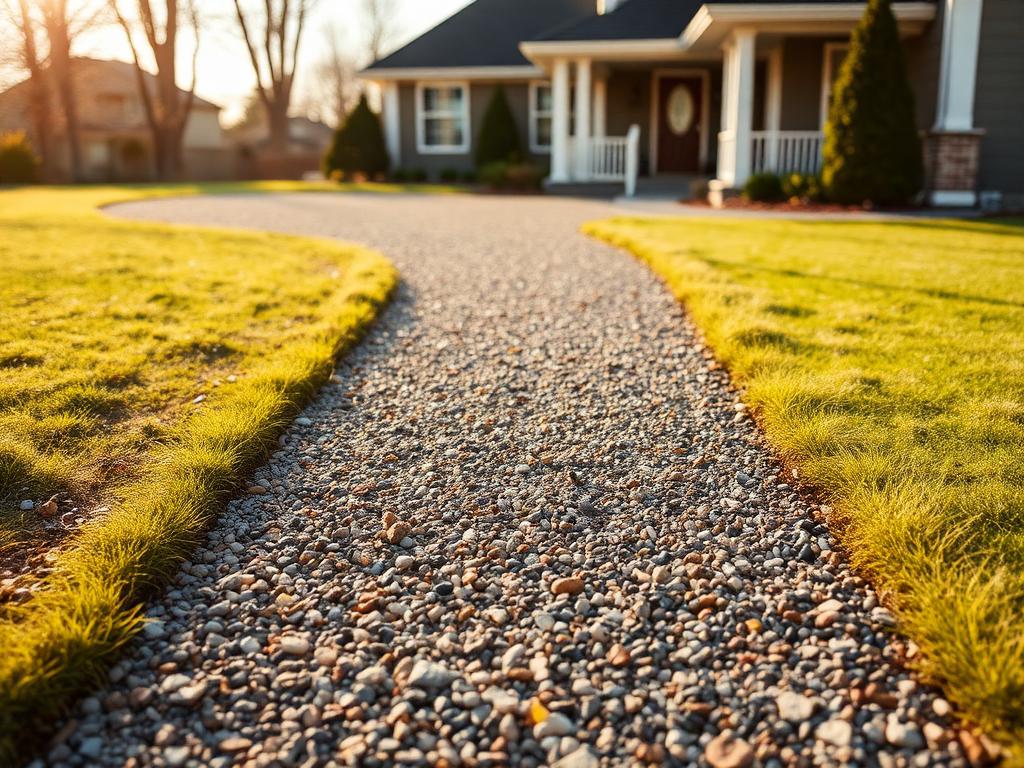
Walking and driving surfaces need stone that stays put. Size, shape and depth all matter more here than colour, and the wrong choice creates rutting, migration and complaints. This page covers what to specify for pathways and driveways.
- Angular chippings and rounded pathway grades
- Sizes chosen for stability underfoot and under tyres
- Suitable for edged and membrane-backed installations
- Bulk tonnage supply
Available sizes
- 6–10 mm
- 10–20 mm
- 20–30 mm
- 20–40 mm
Applications
- Garden and courtyard pathways
- Residential driveways and parking bays
- Resort walkways
- Service and maintenance access routes
- Permeable surfacing schemes
Typical buyers
- Landscaping contractors
- Driveway installers
- Builders and developers
- Distributors
Size and shape for trafficked surfaces
For driveways, 10–20 mm angular material compacts and interlocks best. Rounded pebble in the same size will roll and migrate. For footpaths, 6–10 mm is comfortable to walk on and less likely to be carried indoors on shoes.
Depth and edging
A typical decorative depth is 40–50 mm over a compacted, membrane-backed base, with a firm edge restraint. Deeper layers feel loose underfoot. Our bulk calculation guide explains how to convert area and depth into tonnage.
Tonnage maths for a driveway project
At a standard 40–50 mm compacted depth, one tonne of 10–20 mm angular chippings covers roughly 16–18 square metres, so a typical 40 square metre driveway needs approximately 2.2–2.5 tonnes plus an allowance for the sub-base if one is not already in place. We recommend calculating chippings and any edging or path material as separate tonnage lines, since mixing the maths for two different products in one figure is the most common source of under-ordering on driveway projects.
Sub-base and membrane dependency
Decorative gravel and pebble surfaces perform only as well as what sits underneath them — without a compacted sub-base and a permeable membrane, decorative stone will work down into the soil within a season or two regardless of the size or angularity specified. This is a groundworks decision made before the stone order, but it directly affects how much replacement stone a buyer should budget for in year two if it is skipped.
Reducing stone migration off a driven surface
Beyond choosing angular over rounded stone, a firm edge restraint — timber, metal or stone edging — is what actually stops chippings migrating onto lawns and adjoining paving under vehicle turning movements; size and shape reduce migration but do not eliminate it on their own. Buyers specifying a driveway without an edging line in the project are the ones most likely to report stone loss within the first year.
Samples and pre-shipment inspection for driveway stone
Because driveway stone is judged on how it compacts and locks together as much as on colour, we recommend a physical sample check before a full container is confirmed, so your contractor can test compaction on a small trial area before committing to the size and shape for the full project.
Frost and monsoon behaviour of pathway and driveway stone
Natural stone chippings and gravel are unaffected by frost, but freeze-thaw cycles can heave a poorly compacted sub-base and push stone unevenly, which is a sub-base issue rather than a stone issue. In monsoon climates, angular chippings on a well-drained, cambered sub-base shed water better than rounded pebbles, which can pond and shift on a flat surface.
Driveway pebble against tarmac and resin-bound surfacing
Loose stone driveways cost considerably less to install than tarmac or resin-bound surfacing, drain naturally without additional soakaway design, and can be topped up rather than resurfaced as they wear. The trade-off is that loose stone needs edging and occasional raking or top-up, while tarmac and resin surfaces are fixed and lower-maintenance but far more expensive to lay and to repair.
Wholesale, bulk and export details
This product is supplied on the same commercial basis as the rest of our range: quantity confirmed against container payload, packing quoted separately and documentation prepared to your broker's brief.
Questions buyers ask about pathway & driveway pebbles
- Which is better for a driveway: pebbles or gravel?
- Angular gravel for the trafficked area, decorative pebble for borders and non-driven zones. Mixing both gives the look without the migration.
- How deep should a pathway layer be?
- Around 40–50 mm over a prepared base is standard for decorative use. Deeper layers are harder to walk on.
- Can you supply a full driveway project quantity?
- Yes, bulk tonnage supply is available. Send the area and depth on WhatsApp and we will help convert it into a quantity.
- How much gravel do I need for a driveway?
- At 40–50 mm depth, roughly 2.2–2.5 tonnes of 10–20 mm chippings covers a 40 square metre driveway. Calculate any edging or path material as a separate line.
- Do I need a membrane under a gravel driveway?
- Yes. Without a compacted sub-base and permeable membrane, decorative stone works down into the soil within a season or two regardless of size or shape.
- What stops gravel migrating off a driveway?
- A firm edge restraint such as timber, metal or stone edging, combined with angular rather than rounded stone. Shape alone reduces migration but does not eliminate it.
- Can we get a sample to test compaction before ordering driveway stone?
- Yes, we recommend a physical sample check so your contractor can trial compaction on a small area before the full order is confirmed.
- Is a loose stone driveway more affordable than tarmac or resin-bound surfacing?
- Yes, loose stone typically costs considerably less to install and can be topped up over time, whereas tarmac and resin surfaces are more expensive to lay and to repair.
Related products
Landscaping Stones
Landscaping stones and bulk landscape rock exported from India — pebbles, cobbles and decorative gravel for commercial landscaping and public realm projects.
Bulk Decorative Pebbles
Bulk landscape rock and decorative pebbles from India — container-load supply of garden pebbles, landscaping stones and decorative gravel for importers.
Mixed-Colour Pebbles
Mixed colour pebbles and beach pebbles exported from India for garden centres, landscapers and retail decorative stone ranges.
Browse the full decorative pebble and landscaping stone range (43 product pages).
Buyer guides related to pathway & driveway pebbles
Where we ship pathway & driveway pebbles
- Decorative Pebbles Exporter from India to the USA
- Decorative Pebbles Exporter from India to the United Kingdom
- Decorative Pebbles Exporter from India to the UAE
- Decorative Pebbles Exporter from India to Saudi Arabia
- Decorative Pebbles Exporter from India to Qatar
- Decorative Pebbles Exporter from India to Kuwait
- All export markets we supply
Other pebble colours, finishes and grades we export
By colour
By finish
By application
Gravel, rock & pavers
- Pea gravel
- Decomposed granite
- Crushed granite
- Limestone gravel
- Slate chippings
- Crushed stone
- Decorative rock & gravel
- Landscape rocks
- Decorative gravel
- Marble chips
- White quartz pebbles
- Black lava rock
- Mexican beach pebbles
- Landscape boulders
- Flagstone paving
- Cobblestone pavers
- Stepping stones
- Pebble tiles
- Gabion stone
Request pricing for pathway & driveway pebbles
Send the size band, quantity, packing format and destination port. We reply with a quotation and current batch photographs.
WhatsApp and phone only — +91 63772 07567. We do not use enquiry forms.