Pebble Tiles and Mesh-Backed Pebble Mats
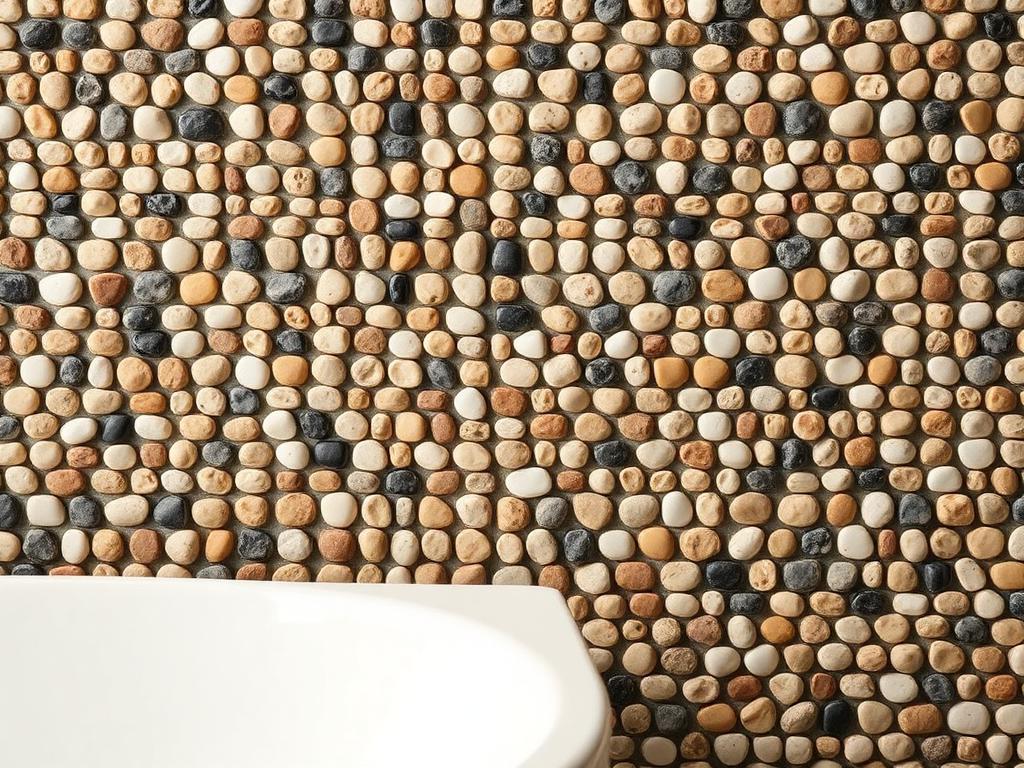
Pebble tiles turn loose stone into something a tiler can install in an afternoon. We supply mesh-backed panels in flat, sliced and standing pebble styles, with edges interlocked so the joints disappear once grouted.
- Standard 300×300 mm panels, other sizes on request
- Flat, sliced and standing pebble styles
- Interlocking edges for seamless joints
- White, black, grey, honey and mixed tones
Available sizes
- 300×300 mm panel
- 305×305 mm panel
- Sliced 8–12 mm thick
- Standing 25–35 mm
Applications
- Shower floors and wet rooms
- Feature walls and splashbacks
- Spa, sauna and pool surrounds
- Hotel and retail interiors
- Stepping panels in courtyards
Typical buyers
- Tile distributors
- Interior contractors
- Hotel fit-out buyers
- Retail importers
Flat, sliced or standing
Sliced pebble gives the flattest surface and is the safest choice for shower floors. Standing pebble creates strong texture for walls. Natural flat pebble sits between the two and is the most economical.
Sealing and grout
Seal before and after grouting so haze does not stick to the stone. We can supply an unsealed or pre-sealed panel depending on what your installers prefer.
Coverage per panel and box
A standard 300×300 mm mesh panel covers 0.09 square metres, so 11–12 panels cover one square metre allowing for cut waste around fixtures; we box panels in fixed square-metre counts (commonly 1 or 1.1 sq m per box) so a tiler can order by area rather than counting loose panels.
Alternative for large open floors
Loose pebble set by hand in mortar gives a more random, natural pattern than repeating mesh panels but takes far longer to lay — mesh panels are the right call for most commercial floors and walls where labour time drives the budget.
A common installation mistake
Grouting sliced pebble panels with a grout that's too thin, which sinks below the pebble tops and leaves sharp stone edges proud of the surface. A thicker grout mix brought level with the highest pebble points gives a smoother, safer wet-area floor.
Sample approval before a production run
Because pebble tile panels are assembled by hand onto mesh backing, we send a sample panel of the exact pebble colour, size and layout density before committing to a full order. This lets a buyer check joint spacing and colour blend under real light rather than from a photograph. Approved sample panels are kept on file so repeat orders match the original specification exactly.
Container loading and carton weight
Boxed pebble tile panels are palletised in fixed square-metre counts, and a standard pallet typically holds 25–30 boxed square metres depending on pebble size and thickness. A 20ft container generally carries 20–24 pallets before reaching payload limits, which works out to several hundred square metres per container — useful for a tile distributor sizing an order against expected sell-through.
Pebble tiles versus poured terrazzo or resin-bound flooring
Terrazzo and resin-bound floors give a completely seamless surface with no visible joints, but require a specialist installer and cannot be repaired piece by piece if damaged. Mesh-backed pebble tiles can be laid by a competent tiler, and an individual damaged panel can be cut out and replaced without redoing the whole floor — a practical advantage for commercial spaces expecting repairs over their lifetime.
Wholesale, bulk and export details
This product is supplied on the same commercial basis as the rest of our range: quantity confirmed against container payload, packing quoted separately and documentation prepared to your broker's brief.
Questions buyers ask about pebble tiles
- Are pebble tiles slippery?
- Less than flat tile — the grout joints and stone profile give grip. Sliced pebble is the usual specification for wet areas.
- What panel size do you supply?
- 300×300 mm is standard. Other panel sizes can be produced to order.
- How are panels packed?
- Boxed in fixed square-metre counts on pallets, so it lands ready for a tile showroom.
- How many pebble tile panels do I need per square metre?
- Around 11–12 standard 300×300 mm panels per square metre, plus extra for cuts around drains, fixtures or irregular room shapes.
- What's the weight per panel for freight and handling?
- A typical mesh-backed panel weighs 3–4 kg depending on pebble size and thickness, so a boxed square-metre pack runs roughly 35–45 kg.
- How do I maintain a pebble tile floor over time?
- Reseal every one to two years in wet-use areas such as showers, and use a pH-neutral cleaner — acidic bathroom cleaners can etch marble-based pebble finishes over time.
- Do you send a sample panel before a bulk pebble tile order?
- Yes — a sample panel matching the exact pebble colour, size and joint density is approved before the full production run, and kept on file for repeat orders.
- How many boxed square metres fit in a container of pebble tiles?
- A standard pallet holds roughly 25–30 boxed square metres, and a 20ft container typically carries 20–24 pallets before reaching payload limits.
Related products
Natural River Pebbles
River pebbles and river rock for landscaping exported from India — rounded, water-worn stone for pathways, drainage, water features and landscape projects.
Polished Pebbles
Polished decorative pebbles exported from India in black, white, grey, honey and mixed colours for retail packs, interiors, water features and display use.
Black Polished Pebbles
Black polished pebbles exported from India — tumbled glossy black stone for water features, interior planters, retail packs and contemporary landscaping.
Browse the full decorative pebble and landscaping stone range (43 product pages).
Where we ship pebble tiles
- Decorative Pebbles Exporter from India to the USA
- Decorative Pebbles Exporter from India to the United Kingdom
- Decorative Pebbles Exporter from India to the UAE
- Decorative Pebbles Exporter from India to Saudi Arabia
- Decorative Pebbles Exporter from India to Qatar
- Decorative Pebbles Exporter from India to Kuwait
- All export markets we supply
Other pebble colours, finishes and grades we export
By colour
By finish
By application
Gravel, rock & pavers
- Pea gravel
- Decomposed granite
- Crushed granite
- Limestone gravel
- Slate chippings
- Crushed stone
- Decorative rock & gravel
- Landscape rocks
- Decorative gravel
- Marble chips
- White quartz pebbles
- Black lava rock
- Mexican beach pebbles
- Landscape boulders
- Flagstone paving
- Cobblestone pavers
- Stepping stones
- Pebble tiles
- Gabion stone
Request pricing for pebble tiles
Send the size band, quantity, packing format and destination port. We reply with a quotation and current batch photographs.
WhatsApp and phone only — +91 63772 07567. We do not use enquiry forms.