Slate Chippings for Borders, Beds and Mulching
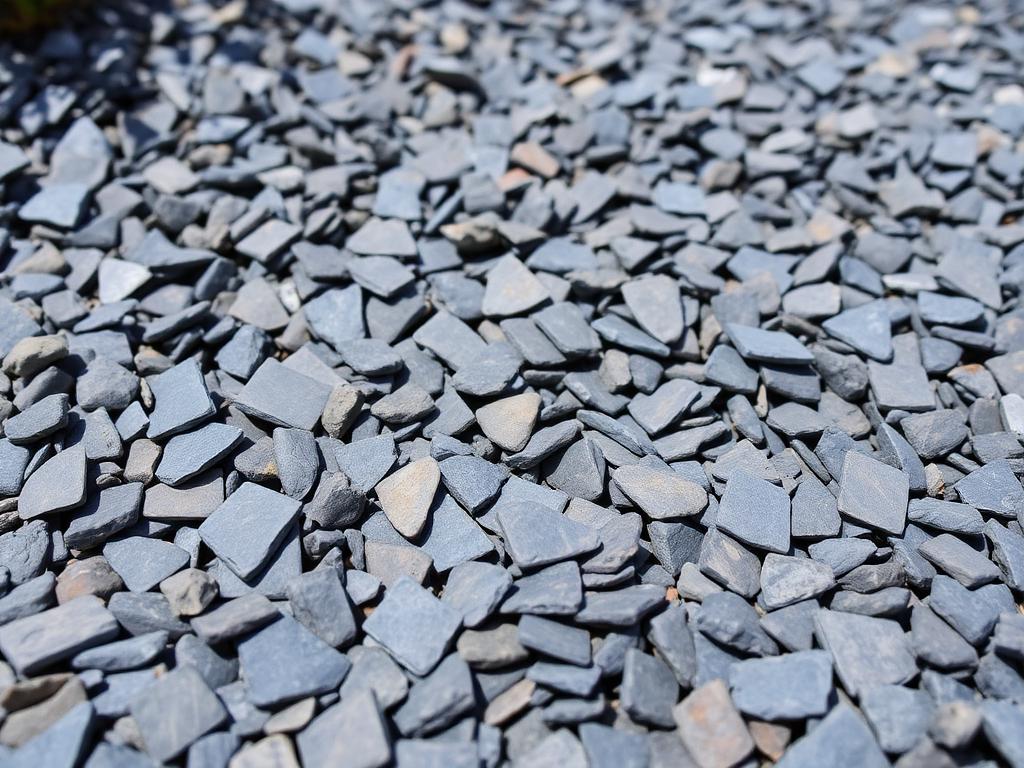
Slate chippings sell because they lie flat, cover well and darken beautifully when wet. Per square metre they go further than rounded stone, which makes them a strong retail line.
- Flat plate-shaped pieces that knit together
- Blue-grey, plum and green colour options
- Excellent coverage per tonne
- Bulk, jumbo bags, retail packs
Available sizes
- 10–20 mm
- 20–40 mm
- 40–70 mm
Applications
- Garden borders and beds
- Mulching around shrubs and trees
- Water features and rain gardens
- Pot and planter topping
- Contemporary courtyard surfacing
Typical buyers
- Garden centres
- Landscape yards
- Retail chains
- Importers
Coverage advantage
Because slate lies flat, a 40 mm layer covers noticeably more ground per tonne than rounded pebbles at the same depth. That difference matters when freight is a large share of landed cost.
Where to avoid it
Slate has sharp edges, so it is not the right choice for barefoot areas, children's play zones or pet runs. Rounded pebbles or pea gravel suit those better.
Colour change wet versus dry
Blue-grey slate goes almost black when wet and returns to a soft graphite tone once dry; plum slate deepens to a rich burgundy wet and fades to a dustier rose-brown dry. This dry-to-wet swing is more dramatic than in any pebble product we sell, and it is a large part of slate's visual appeal after rain.
Coverage compared with rounded pebbles
Because flat pieces knit together with fewer voids, one tonne of 20–40 mm slate covers roughly 16–18 square metres at 40 mm depth, noticeably more than a rounded pebble of similar size at the same depth — a meaningful saving on freight-heavy, high-volume orders.
Packing and container payload
Slate pieces nest flat rather than rolling, so jumbo bags pack denser and containers reach payload limits with fewer bags than an equivalent volume of rounded pebbles; we plan slate loads by weight from the outset rather than by bag count.
Sample and pre-shipment inspection
Slate colour and flatness are checked against an approved sample before each production run is screened and packed, since buyers specify slate largely for its visual character and inconsistent flatness or an off-tone batch is the most common complaint we test against. For blue-grey grades in particular we check the batch under both dry and lightly dampened conditions, since the wet-tone shift is part of what a buyer is approving.
Drainage beneath slate beds
Flat slate pieces knit together tightly, which gives excellent coverage but can shed rainwater across the surface rather than letting it soak straight through, particularly on a slight slope. A free-draining sub-base and membrane beneath the slate, with a slight fall to a drainage point, prevents water pooling at the low end of a bed after heavy rain, which is more of a consideration with flat slate than with rounded pebble.
Retail bag versus bulk supply formats
Garden centres take slate in 20–25 kg printed bags for retail shelving, while landscape contractors doing larger beds or mulching jobs prefer jumbo bags or loose bulk tipped on site. Because slate packs denser by weight than rounded pebble, a jumbo bag of slate typically weighs slightly more than the same nominal size of rounded stone, which is worth flagging to a buyer comparing pack weights across product lines.
Wholesale, bulk and export details
This product is supplied on the same commercial basis as the rest of our range: quantity confirmed against container payload, packing quoted separately and documentation prepared to your broker's brief.
Questions buyers ask about slate chippings
- Does slate suppress weeds?
- Laid at 40–50 mm over a membrane, yes — the flat pieces block light well.
- Do the colours fade?
- Natural slate keeps its colour; it simply looks richer when wet and paler when dry.
- Is slate safe around ponds?
- Yes, it is inert. Rinse before use to clear surface dust.
- How much darker does slate go when wet?
- Blue-grey slate goes almost black wet and returns to graphite dry; plum slate deepens to burgundy wet and fades to dusty rose-brown dry — the most dramatic wet-dry swing among our decorative stones.
- Does slate cover more ground than pebbles per tonne?
- Yes — flat pieces knit together with fewer gaps, so a tonne covers roughly 16–18 square metres at 40 mm depth, more than an equivalent rounded pebble.
- Why does a slate container carry fewer bags than pebbles?
- Flat pieces pack denser by weight, so containers hit payload limits with fewer jumbo bags than the same volume of rounded stone.
- Do you check slate colour and flatness before shipping?
- Yes — each batch is checked against an approved sample dry and lightly dampened, since flatness and the wet-tone shift are both part of what buyers are approving before loading.
- Why does a jumbo bag of slate weigh more than a similar bag of pebbles?
- Flat slate pieces pack denser by weight than rounded stone of the same nominal size, so a jumbo bag typically carries slightly more tonnage for the same bag volume.
Related products
Black Pebbles
Natural black pebbles exported from India in matte, washed and polished finishes for landscaping, water features, interiors and retail decorative stone ranges.
Decorative Rock
Decorative rock and decorative gravel in every common colour and size — white, black, honey, grey, mixed and river tones for beds, paths and ground cover.
Zen Garden Stone
Zen garden stone, raking gravel and feature rocks for Japanese-style gardens — fine white and grey gravel that holds a rake line, plus accent boulders.
Decorative Gravel
Decorative gravel in white, gold, grey, black and mixed tones for beds, paths and ground cover. Washed, screened and packed for bulk or retail supply.
Browse the full decorative pebble and landscaping stone range (43 product pages).
Where we ship slate chippings
- Decorative Pebbles Exporter from India to the USA
- Decorative Pebbles Exporter from India to the United Kingdom
- Decorative Pebbles Exporter from India to the UAE
- Decorative Pebbles Exporter from India to Saudi Arabia
- Decorative Pebbles Exporter from India to Qatar
- Decorative Pebbles Exporter from India to Kuwait
- All export markets we supply
Other pebble colours, finishes and grades we export
By colour
By finish
By application
Gravel, rock & pavers
- Pea gravel
- Decomposed granite
- Crushed granite
- Limestone gravel
- Slate chippings
- Crushed stone
- Decorative rock & gravel
- Landscape rocks
- Decorative gravel
- Marble chips
- White quartz pebbles
- Black lava rock
- Mexican beach pebbles
- Landscape boulders
- Flagstone paving
- Cobblestone pavers
- Stepping stones
- Pebble tiles
- Gabion stone
Request pricing for slate chippings
Send the size band, quantity, packing format and destination port. We reply with a quotation and current batch photographs.
WhatsApp and phone only — +91 63772 07567. We do not use enquiry forms.