Pebble Stone and Pebble Rock for Landscaping and Retail
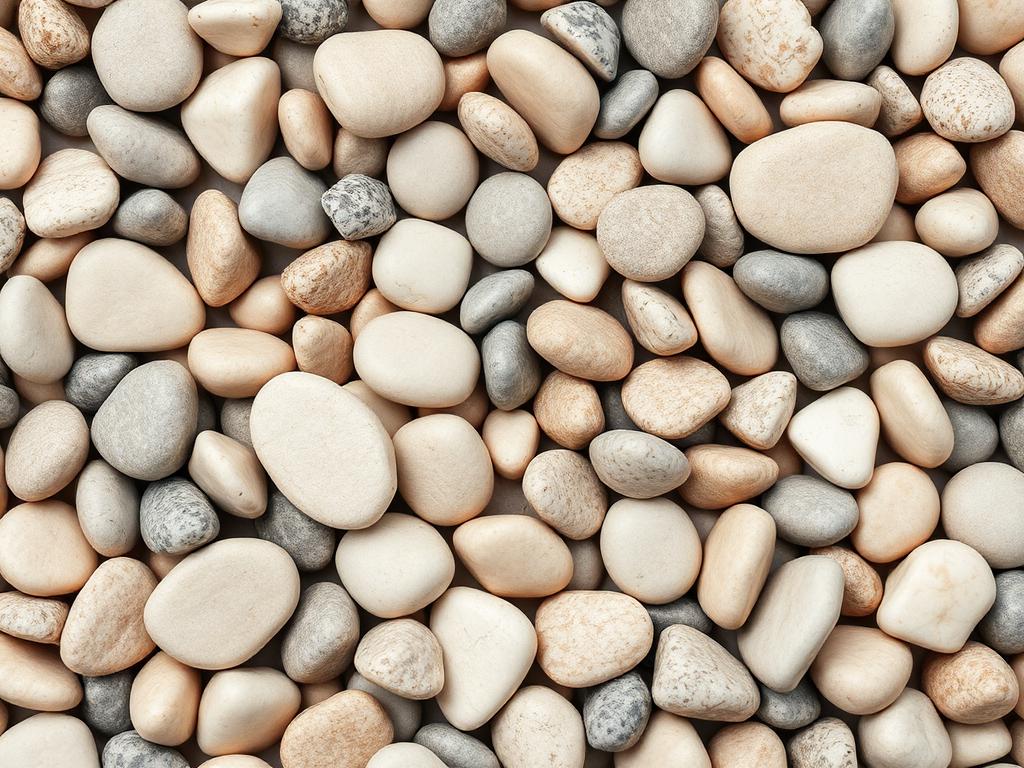
Pebble stone is the catch-all term buyers use before they know which colour or finish they want. This page is the starting point: the colour families we hold, the finishes they come in and how the same stone is packed for a landscape yard versus a retail shelf.
- White, black, cream, honey, grey and mixed families
- Natural matte, tumbled or high-polish finishes
- Hand-sorted to cut chipped and off-colour stones
- Bulk, jumbo bags, 20–25 kg bags or retail packs
Available sizes
- 8–12 mm
- 10–20 mm
- 20–40 mm
- 40–60 mm
- 60–100 mm
Applications
- Garden beds, borders and ground cover
- Water features and pond surrounds
- Pot topping and interior planting
- Paths and courtyard surfacing
- Retail bagged pebble ranges
Typical buyers
- Importers
- Garden centres
- Landscape yards
- Interior and décor suppliers
Pebble stone, pebble rock, gravel — what buyers mean
Pebble stone and pebble rock describe the same thing: naturally rounded stone, typically 8–100 mm. Gravel is angular or smaller. If a customer says pebble but shows you an angular sample, they usually want chippings, not pebbles.
Finish changes the price more than colour
The same white stone sells at three price points depending on finish: natural matte, tumbled, or fully polished. Polishing adds handling time and loses weight, so quote the finish before the colour when you are comparing suppliers.
Sorting quality is what repeat buyers judge
Every batch has chips, off-colour stones and undersize. Sorting standard — not the headline colour — is what makes the second order happen. We agree a rejection tolerance in writing before the first shipment.
Retail versus landscape packing
Retail packs need washed, sorted, uniform stone in 5–20 kg bags. Landscape yards take the same stone in jumbo bags or loose at a lower sort standard and a lower price. Say which channel the stone is for and we pack to it.
Starting a container
A common first container is three colours across two sizes, which lets you test which family moves in your market before committing to single-SKU volume.
Drainage beneath pebble beds
Rounded pebble beds need a compacted, free-draining base beneath any membrane, since pebble itself has larger voids than gravel and drains readily but can still pool water if the ground below is heavy clay or poorly graded. This matters most for beds near building foundations, where standing water beneath a pebble layer can eventually affect the structure it sits against.
Behaviour through winter and cold climates
Hard, dense pebble such as granite or quartz is unaffected by freezing temperatures. Softer, more porous pebble types can be more prone to surface flaking after repeated hard freezes if laid over a poorly draining base that traps moisture against the stone. In markets with harsh winters, specifying a denser pebble type or ensuring excellent base drainage matters more than colour or finish.
Pebble stone versus crushed gravel for the same job
Rounded pebble reads softer and more natural but rolls underfoot and on slopes; crushed gravel of a similar size interlocks and stays in place, making it the better choice for paths with any gradient or vehicle access. Buyers often default to pebble for its appearance without considering that a project brief calling for a stable, trafficked surface is usually better served by an angular alternative.
Wholesale, bulk and export details
This product is supplied on the same commercial basis as the rest of our range: quantity confirmed against container payload, packing quoted separately and documentation prepared to your broker's brief.
Questions buyers ask about pebble stone
- What is the difference between pebble stone and gravel?
- Pebble stone is naturally rounded and smooth; gravel is crushed and angular, or simply smaller in size.
- Which pebble colours sell best?
- White and black lead almost everywhere, with honey and mixed blends behind them in warm-climate markets.
- Are the pebbles dyed?
- No. Every colour we supply is natural stone, hand-sorted rather than coloured.
- Can I get polished and natural finishes in one order?
- Yes. Finishes can be split across the same container.
- What size is best for pot topping?
- 8–20 mm. Larger stone looks out of scale in anything under a 40 cm pot.
- Do you supply samples?
- Yes, before every first order, and we send batch photographs before loading on repeats.
- Does pebble stone need special drainage preparation?
- A compacted, free-draining base beneath the membrane is worth specifying, particularly near building foundations, since pebble's larger voids drain well but can still pool water over heavy clay ground.
- Is pebble stone or crushed gravel better for a sloped path?
- Crushed gravel usually performs better on a slope since its angular faces interlock and resist rolling, whereas rounded pebble tends to migrate downhill under foot traffic or rain.
Related products
Polished Pebbles
Polished decorative pebbles exported from India in black, white, grey, honey and mixed colours for retail packs, interiors, water features and display use.
White Pebbles
White pebbles in snow white, off-white and cream grades — washed, polished or natural matte, for garden centres, landscapers and distributors.
Black Pebbles
Natural black pebbles exported from India in matte, washed and polished finishes for landscaping, water features, interiors and retail decorative stone ranges.
Natural River Pebbles
River pebbles and river rock for landscaping exported from India — rounded, water-worn stone for pathways, drainage, water features and landscape projects.
Browse the full decorative pebble and landscaping stone range (43 product pages).
Where we ship pebble stone
- Decorative Pebbles Exporter from India to the USA
- Decorative Pebbles Exporter from India to the United Kingdom
- Decorative Pebbles Exporter from India to the UAE
- Decorative Pebbles Exporter from India to Saudi Arabia
- Decorative Pebbles Exporter from India to Qatar
- Decorative Pebbles Exporter from India to Kuwait
- All export markets we supply
Other pebble colours, finishes and grades we export
By colour
By finish
By application
Gravel, rock & pavers
- Pea gravel
- Decomposed granite
- Crushed granite
- Limestone gravel
- Slate chippings
- Crushed stone
- Decorative rock & gravel
- Landscape rocks
- Decorative gravel
- Marble chips
- White quartz pebbles
- Black lava rock
- Mexican beach pebbles
- Landscape boulders
- Flagstone paving
- Cobblestone pavers
- Stepping stones
- Pebble tiles
- Gabion stone
Request pricing for pebble stone
Send the size band, quantity, packing format and destination port. We reply with a quotation and current batch photographs.
WhatsApp and phone only — +91 63772 07567. We do not use enquiry forms.