Honey and Yellow Pebbles — Warm Tone Stone
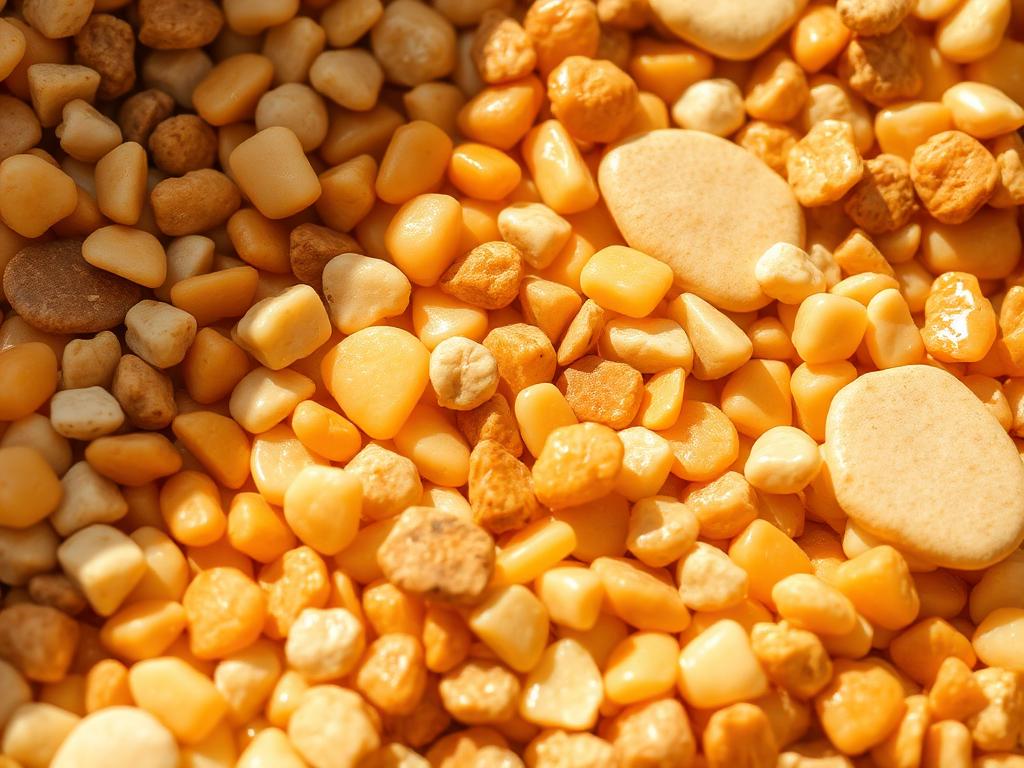
Honey and yellow pebbles are the warm alternative to white. They read softer in strong sunlight, hide dust much better than bright white, and suit Mediterranean, desert and terracotta-based schemes — which is why Gulf and southern European buyers order them heavily.
- Honey, amber, buff and yellow tones
- Hides dust better than bright white
- Washed, natural or polished finishes
- Bulk, bagged and retail packing
Available sizes
- 8–12 mm
- 10–20 mm
- 20–40 mm
- 40–60 mm
Applications
- Garden beds and warm-tone ground cover
- Pathways and courtyards
- Mediterranean and desert planting schemes
- Pot topping and planters
- Retail bagged ranges
Typical buyers
- Garden centres
- Landscape contractors
- Gulf distributors
- Retail importers
Where warm tones outperform white
In hot, dusty climates white stone shows every particle of sand within weeks. Honey and buff tones absorb that visually and keep looking maintained for far longer, which is why they are the default recommendation for UAE, Saudi and North African projects.
Pairing colours
Honey works well banded with black or grey for definition. If you are building a retail range, three colours — a warm, a white and a dark — usually cover most customer demand without over-stocking.
Coverage and depth guidance
Honey and yellow pebbles are typically supplied in 10–20 mm and 20–40 mm bands; at 50 mm depth one tonne of 20–40 mm covers roughly 12–14 square metres. Because the tone hides dust well, many buyers run a slightly thinner 35–40 mm layer than they would with white stone and still keep a clean-looking bed.
Honey pebbles versus decomposed granite
Decomposed granite gives a similar warm tone as a compactable path surface, while honey pebbles stay loose and rounded and are better suited to beds and borders than a walked path. Buyers wanting a firm warm-toned path should look at decomposed granite; for ground cover and planting beds, honey pebbles are the right pick.
Batch-to-batch tone variation
Honey stone naturally ranges from pale buff to deeper amber within the same quarry lot. We agree a reference sample band before the first order and re-check every following batch against it, flagging any shipment that drifts outside the agreed range rather than shipping it silently.
Samples and pre-shipment inspection for honey and yellow tones
Warm-toned stone varies more visibly between batches than pure white or black, so we recommend a sample check or current-batch photographs before confirming an order, particularly for buyers matching honey pebbles against existing paving or planting colour.
Sub-base preparation under honey and yellow pebble beds
A compacted sub-base with a weed membrane is recommended under honey and yellow pebble beds as with any decorative stone, though warm tones are more forgiving of minor soil staining than white stone, which is one reason landscapers often choose honey grades for large exposed areas.
Retail bag versus bulk supply of honey and yellow pebbles
Honey and yellow pebbles sell well in retail 20–25 kg bags for garden centres wanting a warm alternative to white, and in bulk or jumbo bags for contractors covering larger exposed beds where the tone's dust-hiding quality is valued. We quote both formats from the same stone range.
Wholesale, bulk and export details
This product is supplied on the same commercial basis as the rest of our range: quantity confirmed against container payload, packing quoted separately and documentation prepared to your broker's brief.
Questions buyers ask about honey & yellow pebbles
- Is the yellow colour natural?
- Yes, it is natural iron-toned stone. We do not dye pebbles.
- Will honey pebbles fade in strong sun?
- Natural stone tone is stable. Surface dust can lighten the look; a rinse restores it.
- Can honey be blended with white?
- Yes, custom ratio blends are available — see our mixed-colour pebbles page.
- How much honey pebble do I need per square metre?
- At 50 mm depth, roughly 75–85 kg per square metre for 20–40 mm stone — about 12–14 square metres per tonne.
- Should I choose honey pebbles or decomposed granite for a path?
- Decomposed granite compacts and suits a walked path; honey pebbles stay loose and suit beds, borders and pot topping better than a footpath surface.
- Why does honey pebble tone vary between bags?
- It is natural stone with a range from pale buff to deeper amber within one quarry lot. We grade against a sealed reference sample to keep variation inside an agreed band.
- Do you recommend a weed membrane under honey pebble beds?
- Yes, though warm tones are more forgiving of minor soil staining than white stone, a membrane is still recommended for weed control and long-term appearance.
- Can honey pebbles be supplied in both retail bags and bulk for a contractor?
- Yes, we quote both formats from the same range. Tell us the split you need between retail and bulk tonnage.
Related products
Mixed-Colour Pebbles
Mixed colour pebbles and beach pebbles exported from India for garden centres, landscapers and retail decorative stone ranges.
White Pebbles
White pebbles in snow white, off-white and cream grades — washed, polished or natural matte, for garden centres, landscapers and distributors.
Garden Pebbles
Garden pebbles and garden stones exported from India in white, black, mixed-colour and river finishes for garden centres, landscapers and distributors.
Browse the full decorative pebble and landscaping stone range (43 product pages).
Where we ship honey & yellow pebbles
- Decorative Pebbles Exporter from India to the USA
- Decorative Pebbles Exporter from India to the United Kingdom
- Decorative Pebbles Exporter from India to the UAE
- Decorative Pebbles Exporter from India to Saudi Arabia
- Decorative Pebbles Exporter from India to Qatar
- Decorative Pebbles Exporter from India to Kuwait
- All export markets we supply
Other pebble colours, finishes and grades we export
By colour
By finish
By application
Gravel, rock & pavers
- Pea gravel
- Decomposed granite
- Crushed granite
- Limestone gravel
- Slate chippings
- Crushed stone
- Decorative rock & gravel
- Landscape rocks
- Decorative gravel
- Marble chips
- White quartz pebbles
- Black lava rock
- Mexican beach pebbles
- Landscape boulders
- Flagstone paving
- Cobblestone pavers
- Stepping stones
- Pebble tiles
- Gabion stone
Request pricing for honey & yellow pebbles
Send the size band, quantity, packing format and destination port. We reply with a quotation and current batch photographs.
WhatsApp and phone only — +91 63772 07567. We do not use enquiry forms.