Stepping Stones — Natural Stone Steppers for Paths and Lawns
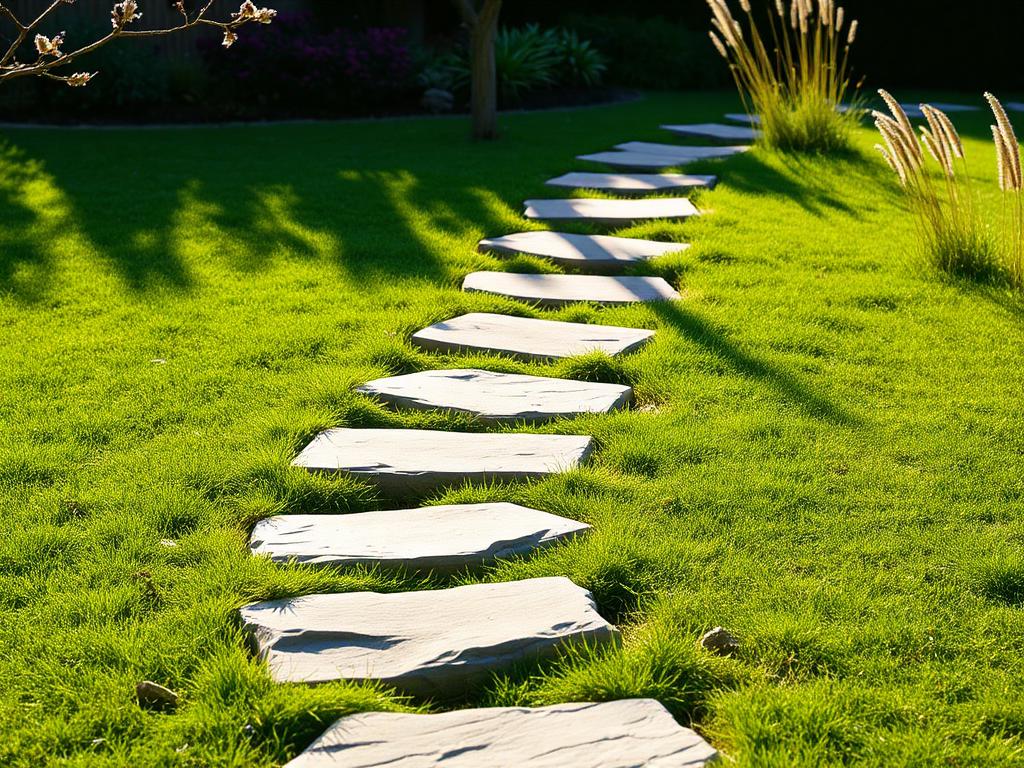
Stepping stones are one of the few landscaping products a customer buys on sight, so face texture and size consistency matter more than anything else. We supply riven random steppers and sawn circles or squares, calibrated for thickness so they bed level.
- Sandstone, granite, slate and limestone
- Random riven and sawn cut shapes
- Calibrated thickness for level bedding
- Crated on pallets, sized for container loading
Available sizes
- 300×300 mm
- 400×400 mm
- 450×450 mm
- 600×300 mm
- Random 300–600 mm
Applications
- Lawn and garden paths
- Courtyard and side-access routes
- Planted bed access and service paths
- Water feature and pond crossings
- Retail bagged and palletised stepper ranges
Typical buyers
- Garden centres
- Landscape contractors
- Stone yards
- Retail importers
Thickness and safety
30–40 mm is the practical minimum for a stepper set into lawn. Thinner slabs crack under a mower wheel. Calibrated thickness across the pallet is what stops a finished path from rocking.
Spacing and layout
Centres of 550–600 mm suit a natural walking stride. Selling stones in that spacing as a set makes the product much easier for a retail customer to buy.
Quantity for a typical garden path
At the recommended 550–600 mm centre spacing, a 10-metre path needs roughly 16–18 stepping stones in a single-file line, or double that for a staggered two-stone-wide path. Always order two to three spares beyond the calculated count to allow for breakage during transit and cutting to fit curves.
Alternative to natural stone steppers
Where budget or freight weight rules out natural stone, cast concrete steppers in a similar riven finish give a comparable look at roughly half the weight per unit, though they lack the colour variation and long-term weathering character of quarried stone.
A common mistake with lawn steppers
Setting stones flush with the grass line without a sand or mortar bed beneath them, so they rock underfoot after the first freeze-thaw cycle or heavy rain softens the soil. A compacted sand bed under each stone prevents this.
Sample approval and pre-shipment checks
Because stepping stones are a visible, sat-upon product, we send sample pieces or numbered photographs of the actual finish and thickness range before a full pallet order ships. Thickness calibration is checked across a sample stack, since a set with uneven thickness is the most common complaint on arrival — sorting for consistent thickness before loading avoids this rather than dealing with returns after.
Container loading and pallet weight
Natural stone steppers are dense and palletised on edge, so a 20ft container typically reaches its payload limit around 22–24 tonnes well before running out of floor space, usually 18–20 pallets depending on stone type and size. Mixed orders combining several stepper sizes or stone types are planned by cumulative pallet weight rather than piece count to confirm the load fits within legal container limits.
Sub-base preparation for stability
Even a well-calibrated stepper will rock if bedded directly onto unprepared soil. A compacted, free-draining base of 30–50 mm of sharp sand or fine gravel beneath each stone, tamped level, prevents the seasonal movement that causes wobble after rain or freeze-thaw cycling. This preparation step matters more to long-term stability than the stone's own thickness once it exceeds the practical 30–40 mm minimum.
Wholesale, bulk and export details
This product is supplied on the same commercial basis as the rest of our range: quantity confirmed against container payload, packing quoted separately and documentation prepared to your broker's brief.
Questions buyers ask about stepping stones
- How thick should stepping stones be?
- 30–40 mm for lawn paths, 50 mm or more where a vehicle may cross.
- Do you supply matched sets?
- Yes, palletised sets in one stone type and a fixed size mix, ready for retail display.
- Which stone lasts longest outdoors?
- Granite and dense sandstone. Slate looks best but needs a riven, non-flaking grade.
- How many stepping stones do I need for a 10 metre path?
- Around 16–18 stones at standard 550–600 mm spacing for a single-file path; double for a staggered two-wide layout.
- What's the freight weight of a pallet of stepping stones?
- Typically 1–1.2 tonnes per pallet depending on stone type and thickness, so a 20ft container usually carries 20–22 pallets before reaching payload limits.
- How should natural stone steppers be maintained?
- Periodic pressure-washing to remove algae in shaded, damp areas, and resealing porous types such as sandstone every few years to reduce staining and moss growth.
- Do you send samples before a stepping stone order ships?
- Yes — sample pieces or numbered photographs of the actual thickness and finish range are approved before a full pallet order is loaded.
- What base is needed under stepping stones to stop them rocking?
- A compacted, free-draining bed of 30–50 mm sharp sand or fine gravel under each stone, tamped level, prevents the movement that causes wobble after rain or frost.
Related products
Cobblestone Pavers
Natural stone cobblestone pavers and setts in granite, sandstone and basalt. Cubes, tumbled cobbles and cobble mats for driveways, courtyards and edging.
Landscaping Stones
Landscaping stones and bulk landscape rock exported from India — pebbles, cobbles and decorative gravel for commercial landscaping and public realm projects.
Pathway & Driveway Pebbles
Driveway gravel, pathway pebbles and decorative gravel exported from India for landscaping contractors, distributors and commercial project buyers.
Browse the full decorative pebble and landscaping stone range (43 product pages).
Where we ship stepping stones
- Decorative Pebbles Exporter from India to the USA
- Decorative Pebbles Exporter from India to the United Kingdom
- Decorative Pebbles Exporter from India to the UAE
- Decorative Pebbles Exporter from India to Saudi Arabia
- Decorative Pebbles Exporter from India to Qatar
- Decorative Pebbles Exporter from India to Kuwait
- All export markets we supply
Other pebble colours, finishes and grades we export
By colour
By finish
By application
Gravel, rock & pavers
- Pea gravel
- Decomposed granite
- Crushed granite
- Limestone gravel
- Slate chippings
- Crushed stone
- Decorative rock & gravel
- Landscape rocks
- Decorative gravel
- Marble chips
- White quartz pebbles
- Black lava rock
- Mexican beach pebbles
- Landscape boulders
- Flagstone paving
- Cobblestone pavers
- Stepping stones
- Pebble tiles
- Gabion stone
Request pricing for stepping stones
Send the size band, quantity, packing format and destination port. We reply with a quotation and current batch photographs.
WhatsApp and phone only — +91 63772 07567. We do not use enquiry forms.