Landscape Rocks and Landscaping Rock for Yards and Beds
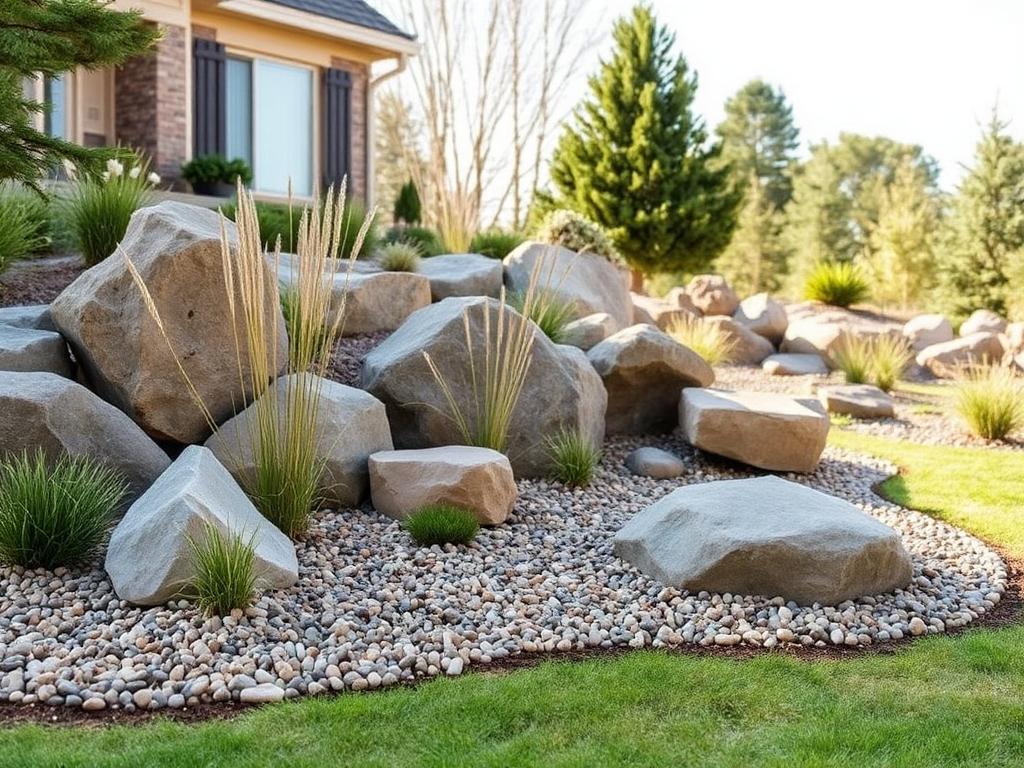
Landscape rock covers everything from 10 mm ground cover to hand-set feature boulders, and most yards stock three or four sizes rather than one. We supply the full ladder from a single origin so a buyer can fill a container with the size mix their customers actually take off the pile.
- One origin for pebble, cobble and boulder sizes
- Natural stone colour — never painted or dyed
- Loose bulk, jumbo bags, 20–25 kg bags or retail packs
- Mixed-size containers so a yard can restock several SKUs at once
Available sizes
- 10–20 mm
- 20–40 mm
- 40–70 mm
- 70–150 mm
- 150–400 mm feature rock
Applications
- Ground cover and mulch replacement
- Dry creek beds and drainage swales
- Rock gardens and xeriscape schemes
- Borders, edging and tree rings
- Feature rock and boulder placement
Typical buyers
- Landscape supply yards
- Garden centres
- Contractors
- Wholesale importers
Choosing a size for the job
Under 20 mm reads as gravel and walks comfortably. 20–40 mm is the general-purpose landscape rock most yards sell by the tonne. Above 70 mm the stone stops behaving like a surface and starts reading as an object, which is where dry creek beds and feature placement begin.
Coverage and tonnage
As a working guide, one tonne of 20–40 mm landscape rock covers roughly 9–11 square metres at 50 mm depth. Send us the areas and depths you are quoting and we will return tonnage per size band plus the container split.
Why colour consistency matters more than the sample
Natural rock varies batch to batch. What protects a yard is not a perfect sample but an agreed tolerance: we photograph the loaded batch before sealing so the stone landing at your yard matches the stone your customer saw last season.
Ground cover versus decorative feature
Ground-cover rock is bought on price per tonne and volume; feature rock is bought on shape and character. Keep the two lines separate in your pricing — buyers who compare a feature boulder against a bulk gravel rate will always think the boulder is expensive.
Ordering a mixed container
A 20 ft container carries roughly 25–27 tonnes of landscape rock. Most first orders split it across three sizes and two colours, which lets a yard test demand before committing a full container to one SKU.
Drainage beneath mixed-size beds
Landscape rock beds combining several size bands should sit over a compacted, free-draining base with a slight fall, since larger stone in particular can trap water in the gaps between pieces if the ground beneath doesn't drain. Poor drainage shows up first as algae staining on the underside-facing surfaces of larger rock and pooling around feature boulders, both avoidable with basic base preparation before the rock goes down.
Weed membrane across size transitions
Where a bed transitions from fine ground-cover gravel to larger feature rock, lay one continuous membrane under the whole area rather than separate pieces per zone — gaps at membrane joins are where weeds most reliably establish. The membrane should be cut carefully around any boulders set directly into the ground rather than sitting on top of the rock layer, since boulders are usually seated below grade for stability.
Behaviour through winter and frost
Hard landscape rock itself is unaffected by frost, but poorly drained beds can heave as trapped water freezes beneath smaller gravel sizes, disturbing the surface layer. Larger cobble and boulder placements are generally undisturbed by frost since their weight and depth of bedding resist movement. Free-draining base preparation matters more in cold climates than any property of the stone size or colour.
Wholesale, bulk and export details
This product is supplied on the same commercial basis as the rest of our range: quantity confirmed against container payload, packing quoted separately and documentation prepared to your broker's brief.
Questions buyers ask about landscape rocks
- What is the difference between landscape rock and gravel?
- Gravel is the smaller, walkable end of the range — usually under 20 mm. Landscape rock is the broader term and includes cobble and boulder sizes used as features.
- What depth should landscape rock be laid at?
- 50 mm for decorative ground cover over fabric, 75–100 mm where you need weed suppression without fabric.
- Can I mix sizes in one container?
- Yes. Most buyers split a container across three or four size bands and two colour families.
- Do you supply washed rock?
- Yes. Washed is standard for retail packs; unwashed is available where the buyer prefers a lower price for bulk yard sales.
- How much landscape rock fits in a container?
- Roughly 25–27 tonnes in a 20 ft container, depending on stone density and pack format.
- Is the colour natural?
- Yes. Every colour we ship is the natural stone colour, hand-sorted rather than dyed.
- Does a mixed landscape rock bed need special drainage?
- A compacted, free-draining base with a slight fall is worth specifying, particularly under larger stone, since poor drainage shows up as algae staining and water pooling between pieces.
- Can frost disturb a landscape rock bed?
- Fine gravel over a poorly drained base can be disturbed as trapped water freezes and heaves; larger cobble and boulder placements are generally unaffected due to their weight and bedding depth.
Related products
Landscaping Stones
Landscaping stones and bulk landscape rock exported from India — pebbles, cobbles and decorative gravel for commercial landscaping and public realm projects.
Decorative Rock
Decorative rock and decorative gravel in every common colour and size — white, black, honey, grey, mixed and river tones for beds, paths and ground cover.
Landscape Boulders
Natural landscape boulders and feature rocks from 200 mm to over a metre for gardens, rockeries, water features and public realm projects. Palletised or loose.
Natural River Pebbles
River pebbles and river rock for landscaping exported from India — rounded, water-worn stone for pathways, drainage, water features and landscape projects.
Browse the full decorative pebble and landscaping stone range (43 product pages).
Where we ship landscape rocks
- Decorative Pebbles Exporter from India to the USA
- Decorative Pebbles Exporter from India to the United Kingdom
- Decorative Pebbles Exporter from India to the UAE
- Decorative Pebbles Exporter from India to Saudi Arabia
- Decorative Pebbles Exporter from India to Qatar
- Decorative Pebbles Exporter from India to Kuwait
- All export markets we supply
Other pebble colours, finishes and grades we export
By colour
By finish
By application
Gravel, rock & pavers
- Pea gravel
- Decomposed granite
- Crushed granite
- Limestone gravel
- Slate chippings
- Crushed stone
- Decorative rock & gravel
- Landscape rocks
- Decorative gravel
- Marble chips
- White quartz pebbles
- Black lava rock
- Mexican beach pebbles
- Landscape boulders
- Flagstone paving
- Cobblestone pavers
- Stepping stones
- Pebble tiles
- Gabion stone
Request pricing for landscape rocks
Send the size band, quantity, packing format and destination port. We reply with a quotation and current batch photographs.
WhatsApp and phone only — +91 63772 07567. We do not use enquiry forms.